Last Updated: September 24, 2026
The term muscle weakness covers several realities. It ranges from simple muscle fatigue to actual loss of strength, whether transient or chronic. But in which cases can we be a victim of this type of symptoms? What treatments can be implemented? Focus on muscle weakness in this article.
this article belongs to Strength Training
Table of Contents
Types of Muscle Weakness
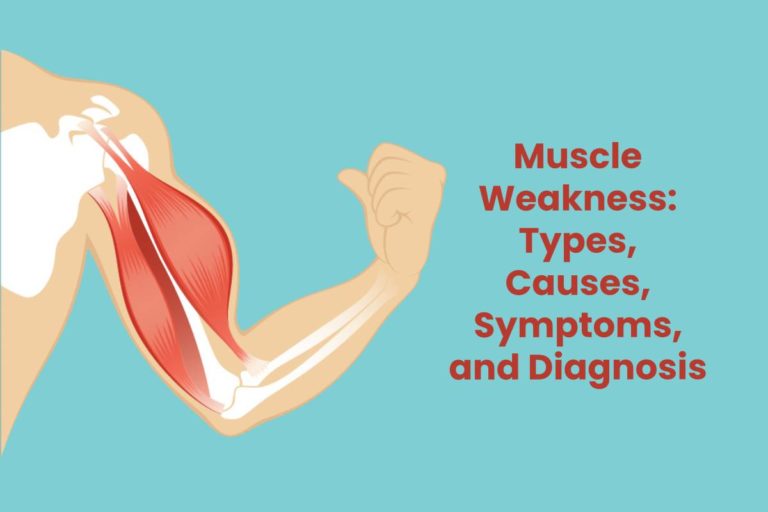
Muscle weakness is a temporary or lasting loss of strength in a muscle or group of muscles. Theoretically, all areas of the body can be victims of this muscle weakness. It affects both striated muscles (voluntary muscles such as the muscles of the limbs or neck) and specific smooth muscles (for example, the bladder muscles, which results in urinary incontinence).
However, to differentiate the types of muscle weakness, we distinguish:
Fatigability
In which the muscles react in a usual way but tire quickly (usually the recovery is also longer than average);
Muscle Fatigue
In which a feeling of exhaustion arises with the use of a muscle (or muscle group);
True
Muscle weakness which results in reduced muscle strength, regardless of activity, with the muscle not responding correctly from the start of exertion.
How Muscle Weakness Can Affect Daily Activities
The effects of muscle weakness can vary significantly from one person to another. Some people may notice difficulty carrying groceries, climbing stairs, standing from a chair, or lifting objects that were previously easy to handle. Others may notice that a particular body part feels less stable or that ordinary physical activities require more effort than usual.
The location of the weakness can also provide useful information to a healthcare professional. For example, weakness affecting one side of the body may have different possible causes from weakness that affects several muscle groups. Similarly, weakness that develops suddenly should be treated differently from weakness that develops gradually over weeks or months.
It can be useful to pay attention to when the weakness began, whether it is getting worse, and which activities make it more noticeable. Keeping track of these details can help provide a clearer description during a medical appointment.
To understand how this fits into the broader picture, explore our Comprehensive The Best Chest Exercises In Bodybuilding Pillar.
Causes
There are many causes of muscle weakness. Many of them are not directly related to muscle damage but only to a condition that leads to muscle fatigue.
In particular, we can find causes:
- Inflammatory (in the case of the flu, for example, fever often causing severe fatigue and muscle weakness);
- Rheumatological (fibromyalgia or osteoarthritis, for example);
- Neurological (in the event of chronic fatigue syndrome – or myalgic encephalopathy – or following a stroke or in the context of multiple sclerosis, for example);
- Neuromuscular in case of damage to the spinal cord or problems with the nerves or muscles;
- Endocrine (for example, following childbirth or in case of hypothyroidism);
- Infectious (mononucleosis or HIV, for example);
- Iatrogenic, in particular, due to drugs such as corticosteroids, statins, or chemotherapy;
- Genetic (Duchenne myopathy or muscular dystrophy, for example);
- Emotional (for example, the legs which no longer support us following an emotional shock).
Lifestyle Factors That May Contribute to Fatigue
Not every experience of tired muscles is caused by an underlying disease. Temporary fatigue can occur after demanding physical activity, inadequate recovery, poor sleep, dehydration, or insufficient nutrition. A person who suddenly increases their training volume may also experience more fatigue than usual.
For this reason, it is useful to consider recent changes in lifestyle when muscle weakness appears. Think about whether you have recently started a new exercise routine, increased the intensity of your workouts, changed your diet, or experienced significant changes in your sleep schedule.
However, lifestyle factors should not automatically be assumed to be the cause of persistent or unexplained weakness. If the problem continues, becomes worse, or interferes with normal activities, professional medical evaluation is appropriate.
You may also find our companion piece on How To Gain Weight And Muscle Overview helpful for further context.
Symptoms Related To Muscle Weakness
Muscle weakness can itself be a symptom of specific pathologies. Often, more than a noticeable loss of muscle strength, the person feels tired, exhausted.
It is not uncommon for [muscle weakness] to be accompanied by pain. The problem can sometimes lead to less mobilization of a part of the body, which will lose muscle strength and become weaker over time.
Depending on its origin, this [muscle weakness] may be temporary or irreversible.
When Should Muscle Weakness Be Taken Seriously?
The timing and severity of weakness are important. A sudden and significant loss of strength, particularly when it affects one side of the body, requires urgent medical attention. Muscle weakness accompanied by difficulty speaking, severe dizziness, loss of coordination, difficulty breathing, or other sudden neurological symptoms should also be treated as an emergency.
For less urgent cases, arrange a medical appointment if unexplained weakness persists, repeatedly returns, gradually worsens, or prevents you from completing normal daily activities. It is better to investigate persistent symptoms rather than assuming they are simply the result of exercise or tiredness.
What is the Diagnosis?
The diagnosis of [muscle weakness] will usually be made using an electromyogram. This examination makes it possible to record the electrical activity of nerves and muscles and observe their reaction and determine its origin, especially when it is neuromuscular.
However, additional examinations may be necessary. In some cases, blood tests, x-rays, or biopsies will help diagnose a muscle tumor such as rhabdomyosarcoma. It may even be interesting to perform a lumbar puncture, a computed tomography, an ultrasound, or even an MRI in some specific cases. Are you looking for quick access to an MRI scan? Book yourself.
Thus, it is necessary to consult your doctor in case of unexplained [muscle weakness]. Indeed, making a diagnosis is essential to rule out any severe causes and implement a treatment adapted to it.
For related practical techniques, check out our insights in Top 5 Steps To Strengthen Your Teeth Practical Tips.
What Can a Medical Evaluation Involve?
A healthcare professional will usually want to understand when the weakness started and whether it developed suddenly or gradually. They may ask about recent illnesses, medications, physical activity, sleep, nutrition, and other symptoms.
A physical examination may also be used to compare strength on both sides of the body and assess movement, reflexes, coordination, and other relevant functions. Depending on what is found, additional testing may be recommended.
The purpose of these evaluations is not simply to confirm that weakness exists but to determine what may be contributing to it. Since muscle weakness can have many possible causes, treatment should be based on the underlying problem rather than treating the symptom alone.
Learn more about sustainable community wellness priorities at the UN Sustainable Development Goals.
Treatment and Management
There is no single treatment that works for every type of muscle weakness. Management depends on the cause identified by a healthcare professional. For example, weakness associated with temporary illness may improve as the underlying condition resolves, while weakness caused by a neurological, muscular, endocrine, or medication-related problem may require a different approach.
In some situations, physical therapy or a carefully designed exercise program may be recommended to maintain mobility and improve functional strength. However, people experiencing unexplained weakness should avoid suddenly increasing exercise intensity without understanding the cause.
Adequate sleep, balanced nutrition, hydration, and appropriate recovery can support general physical function, but these measures should not replace medical assessment when weakness is persistent or unexplained.
Ultimately, recognizing the difference between ordinary fatigue and genuine loss of strength is important. Paying attention to changes in strength, documenting associated symptoms, and seeking appropriate medical advice can help identify the cause and determine the most suitable way to manage it.